Tourist Drowns in Surfers Paradise

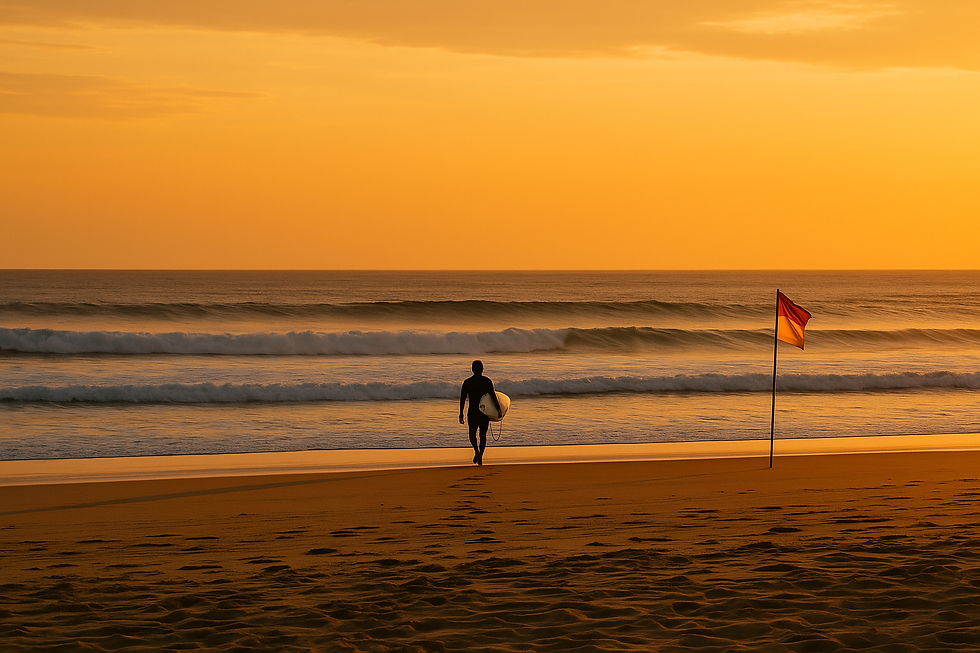
An Italian man in his 50’s has died after being pulled unconscious from the water at Surfers Paradise on the Gold Coast, Australia.
Emergency crews attempted CPR at the scene, but he could not be revived. Details are still emerging, but what is clear is that he was swimming outside the flagged life guarded area.
This tragedy highlights something important: if you swim outside the flags, you need to understand the sea.

Flags save lives — when they are present. But when you travel to remote coastlines or when lifeguard cover ends for the season, you are effectively “outside the flags” every time you enter the sea.
In Europe, that moment is now. Most beaches are unguarded until spring. Many people are swimming daily, walking with their children, surfing winter swells — often without knowing how to read the water around them.
That lack of knowledge is what creates risk.
Develop your Sea Sense with the Sea Swim Manual — how to read waves, tides, and coastal hazards.
Stay Safe
3 Key Lessons from Surfers Paradise
This tragedy highlights three clear dangers of tourists travelling to new places: being somewhere new increases risk, not knowing how to read the sea leaves you exposed, and timing is everything.
1️⃣ Being somewhere new increases risk
When you stand on a beach you’ve never been to before, you do not know its personality. Every coastline has patterns shaped by seabed depth, wave exposure and currents.
A seabed dropping quickly creates a steep wave that surges high up the sand then drains sharply back out. That drainage creates fast pull, especially after big sets. A person who has swum for years in shallow, gentle bays will not expect that sudden force.
When travelling, assume the beach is stronger than you are used to. Spend a minute watching first. Count how long the sets last. Look for channels where water drains. Notice where stronger waves meet calmer patches. Your safety begins before you step in.
2️⃣ Not knowing how to read the sea leaves you exposed
Most coastal hazards are invisible until the exact moment they become dangerous. On the day of this tragedy the water may have looked calm between sets — but that calmness was likely the drainage channel where the sea was returning seaward.
People often misjudge danger because it does not look dramatic. Rips look quiet. Powerful waves arrive suddenly. Fast pull happens at ankle depth. Without sea sense, the brain cannot interpret what it is seeing, and panic arrives fast.
Reading the sea is a skill. Once learnt, it changes everything. A darker patch between breaking waves is not calm water — it is water flowing out. A sudden steep rise in the wave is not exciting — it is impact energy. A rapid drop in noise often means a set has just broken offshore — and another is coming.
3️⃣ Timing is Everything
The sea moves through rhythm. Big sets arrive, then smaller ones follow. These cycles stretch and shrink throughout the day. Most trouble happens when people exit at the wrong moment — turning their back, caught mid-beach when the next surge folds.
The simple timing rule is this:
Let the biggest set hit first. Wait for the water to drain. Then move quickly while the sea is quiet. If you are already in deep water, face the waves. Dive under them. Never rush against incoming power. When the surge passes, use the retreating water to carry you forward, then stand and move high up the beach before the next set arrives.

If you love spending time by the ocean and want to understand it better, join a Tide School Masterclass. Sessions are available for individuals, families or groups - helping you safely enjoy the sea with confidence.


Comments